Style Guide

How to Build a Fall Wardrobe

Build a fall wardrobe with textured layers, practical outerwear, and grounded colors that make everyday outfits easier to repeat.

Article summary

  • Use texture and layering to create interest before you rely on more shopping or more styling.
  • Build fall around overshirts, chore coats, knitwear, denim, corduroy, wool trousers, and dependable boots.
  • Anchor color with navy, charcoal, olive, brown, burgundy, and camel so the wardrobe stays easy to repeat.
  • Layer from thin to thick and keep pieces easy to add or remove as the day shifts.
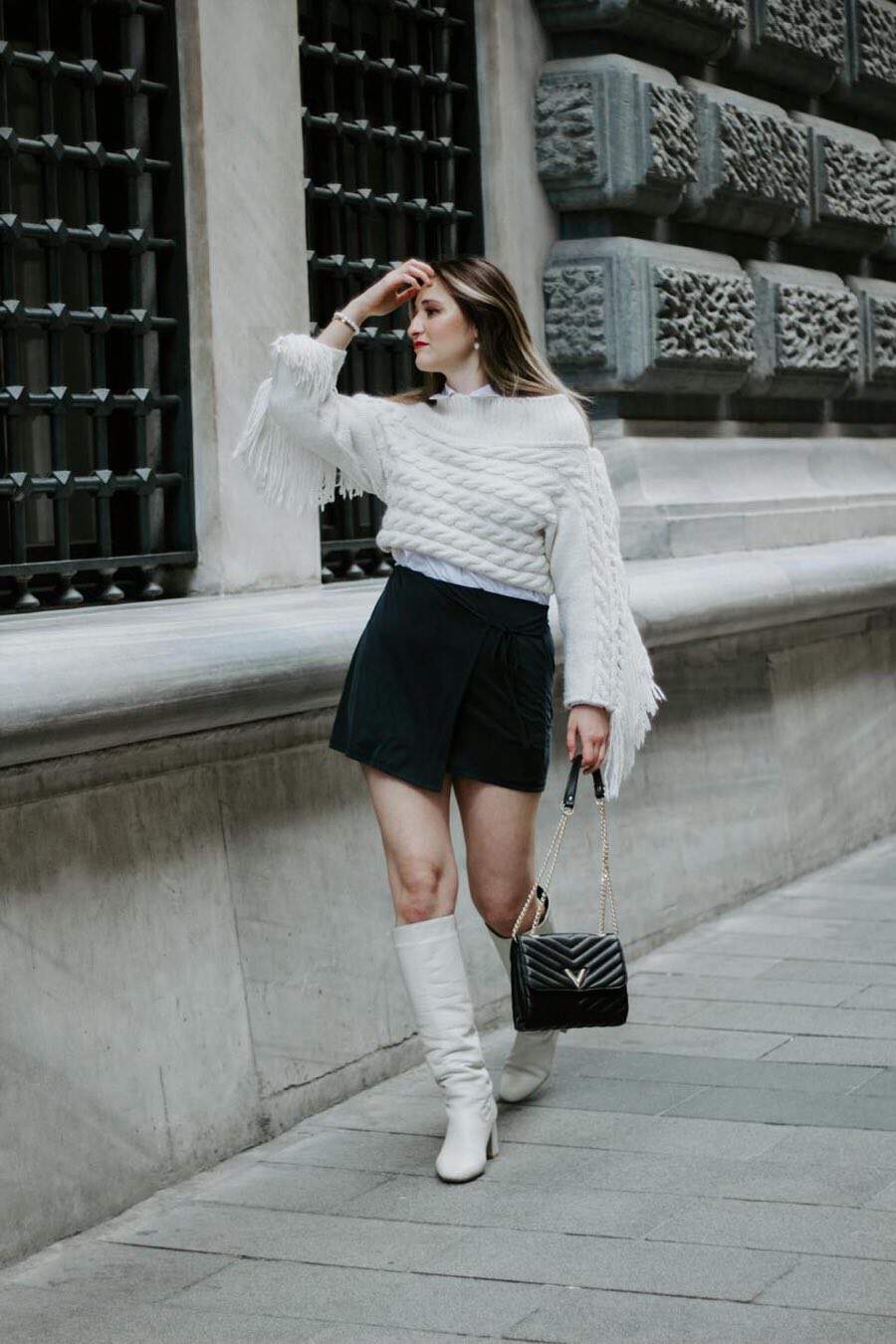
Fall outfit with textured layers and rich, grounded color

Build the season around useful outer layers and grounded trousers

Fall clothing works best when it helps you move gradually out of summer instead of forcing an abrupt jump into winter heaviness. That is why the season belongs to versatile outer layers, useful shirts, dependable knitwear, and trousers with more surface and weight than summer fabric but less burden than full winter cloth.

The easiest fall mistake is to buy for atmosphere instead of function. A wardrobe full of suede, dark colors, and heavy knits may look right in theory and still fail if the pieces do not layer well, run too hot, or do not work across your real week. The strongest fall capsule starts with categories that can bridge warm afternoons and cold evenings without drama.

Fall capsule flat lay with layers, trousers, boots, and accessories

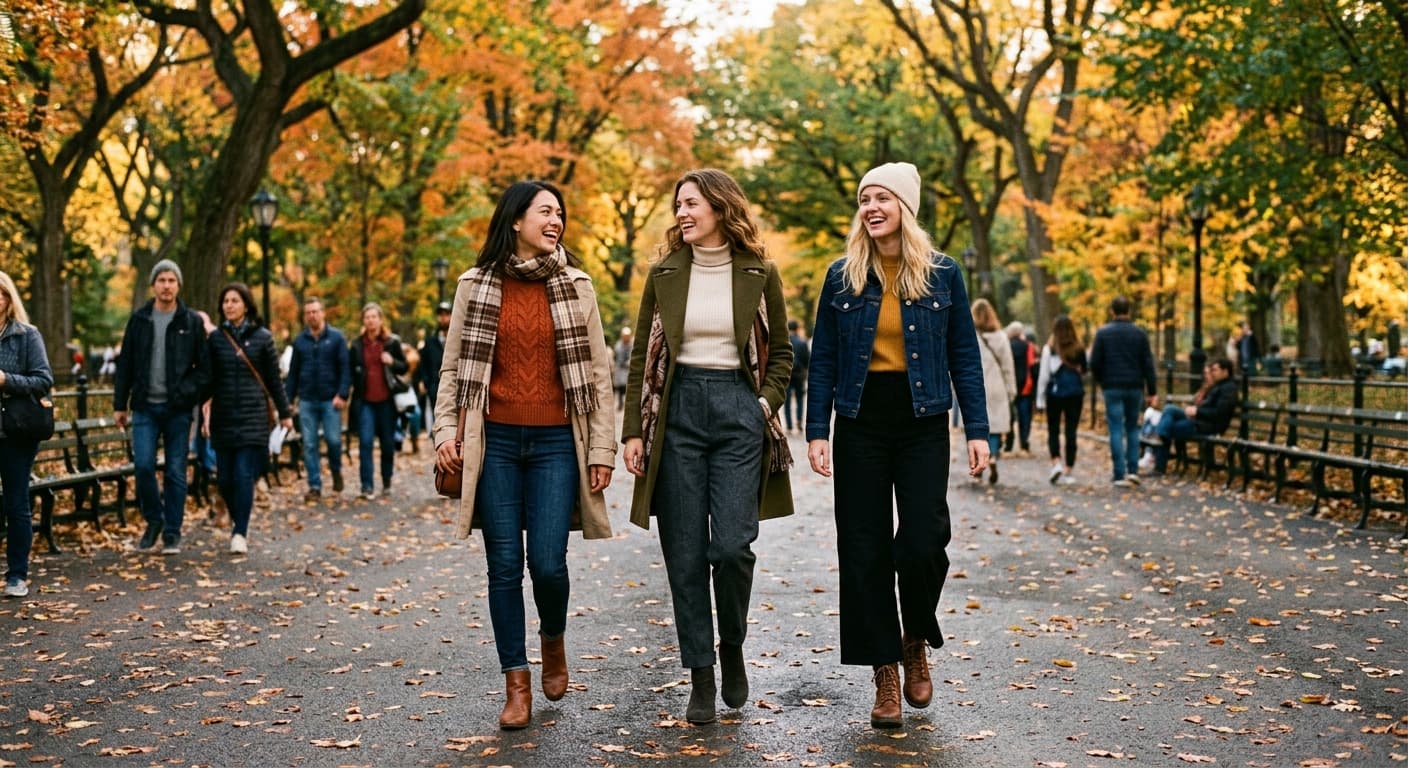
Fall outfits showcasing knitwear, denim, boots, and scarves

Photo by cottonbro studio on Pexels

Outer layers do most of the seasonal work

A chore coat, waxed jacket, overshirt, field jacket, or light wool layer will usually do more for a fall wardrobe than a pile of trend-led separates. These are the pieces that decide whether the outfit can adapt as the weather moves. They also create the visual structure that makes even simple jeans-and-knit combinations feel intentional.

What matters most is flexibility. A fall outer layer should work over a tee early in the season, then over knitwear later. If it only works inside one narrow weather band, it is not doing enough heavy lifting.

Curated Product Recommendations

Elevated

Kallmeyer

Elliot Chore Coat in Cotton Denim

Outerwear

Elliot Chore Coat in Cotton Denim
Staples

Province of Canada

Reverse Fleece Overshirt Cream - Unisex

Outerwear

Reverse Fleece Overshirt Cream - Unisex
Elevated

COS

Men’s Cotton Straight-Leg Chinos

Trousers

Men’s Cotton Straight-Leg Chinos
Elevated

Meermin

Black Calf Horsebit Loafer

Footwear

Black Calf Horsebit Loafer

Let fabric and texture do some of the visual work

Fall is the season where texture can carry an outfit even when the color palette stays restrained. Corduroy, brushed cotton, suede, denim, waxed cotton, merino, and wool all give depth in ways that summer fabrics usually do not. This is one reason fall outfits often feel richer with less effort. The fabric is already doing part of the styling.

That does not mean every look needs maximum texture. The better move is to let one or two surfaces lead. Corduroy trouser with smooth knitwear. Waxed jacket with denim. Suede shoe with flannel shirt. When too many textures compete at once, the outfit can start feeling noisy instead of layered.

Dress for fall by relying on heavier materials such flannel, curduroy, wool, and denim

Dress for fall by relying on heavier materials such flannel, curduroy, wool, and denim

Photo by Harrison Haines on Pexels

Choose texture that supports daily wear, not just aesthetics

Wool and merino help with temperature control. Corduroy adds durability and surface interest. Waxed cotton gives weather resistance. Denim brings weight and familiarity. Suede adds softness and contrast, but asks for more care. The right mix depends on your climate and routine, not just on what feels seasonally appropriate.

This is another place where HiLo's wardrobe logic matters. A textured piece should make existing outfits more usable, not demand an entirely separate set of companions.

Curated Product Recommendations

Elevated

Alex Mill

Regent Jacket In Waxed Cotton

Outerwear

Regent Jacket In Waxed Cotton
Staples

Province of Canada

Ivy Cable Knit Sweater Forest - Unisex

Knitwear

Ivy Cable Knit Sweater Forest - Unisex
Elevated

COS

Women’s Pleated Barrel-Leg Wool Pants

Trousers

Women’s Pleated Barrel-Leg Wool Pants
Elevated

Meermin

Black Waxy Commander Service Boot

Footwear

Black Waxy Commander Service Boot

Use color to support texture, not compete with it

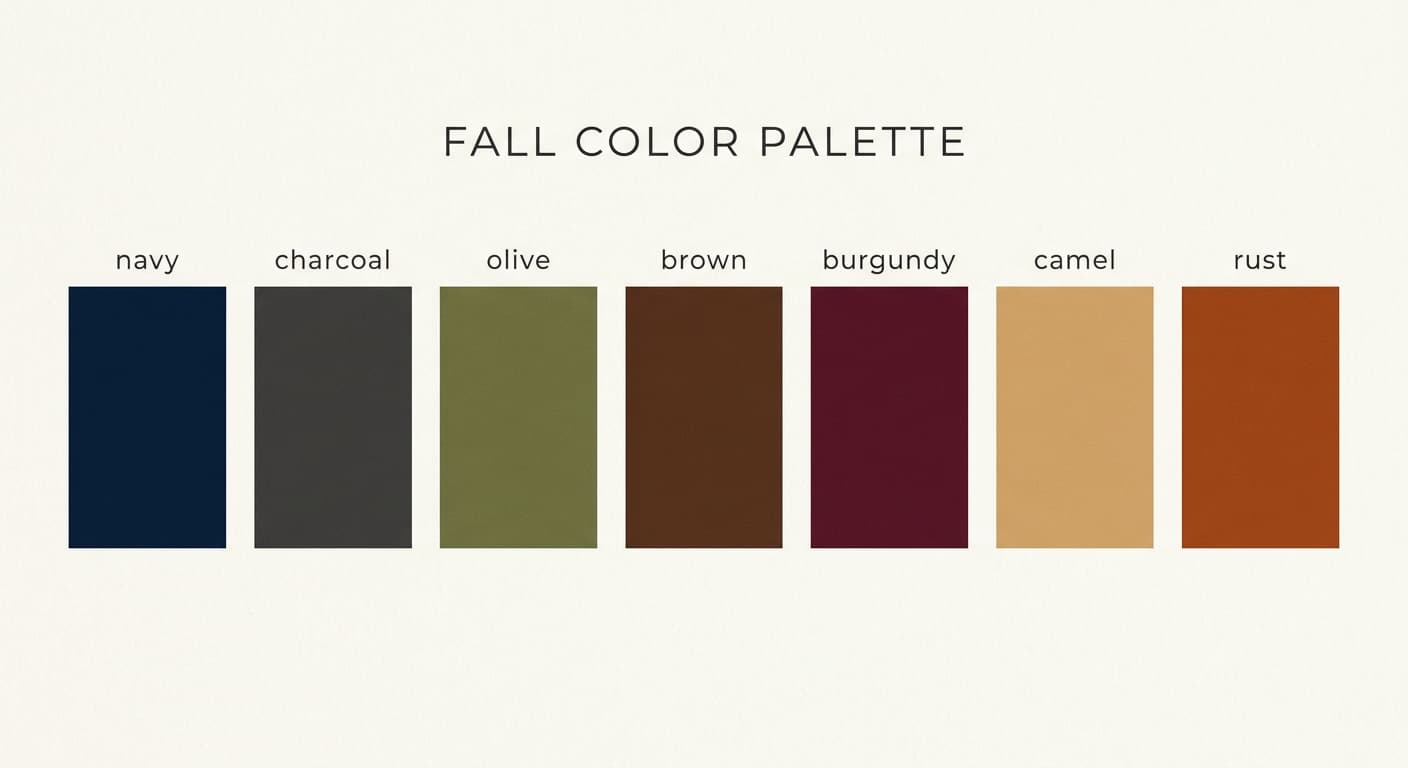
Fall palettes are easiest to wear when they start from a few reliable neutrals. Navy, charcoal, black, olive, camel, and dark brown create enough stability that you can add burgundy, rust, forest green, or golden tones without making the wardrobe harder to manage.

This is also why fall often looks best when color moves in deeper, quieter tones. The season already has plenty of visual interest through texture and layering. Color works better when it deepens that mood instead of trying to overpower it.

Fall palette graphic with navy, charcoal, olive, brown, burgundy, camel, and rust

Fall color palette graphic to help you get inspiration for outfit coordination

Layer from thin to thick and keep the outfit adjustable

The simplest fall layering rule is still the best one: start thinner and move outward. Tee or light knit first. Then flannel, overshirt, or sweater. Then chore coat, field jacket, or another outer layer if the day demands it. This keeps the outfit workable across temperature swings and stops it from feeling bulky too early.

Adjustability matters more than drama. Button-front layers, unstructured jackets, and knits that can come on and off easily are what make fall wardrobes feel practical instead of precious. If the outfit only works at one exact temperature, it is not solving the season well enough.

Street style example of layered fall dressing with overshirt, knitwear, and boots

Examples of outfits that you can layer up or down depending on the fall weather

Turn the capsule into dependable fall outfit formulas

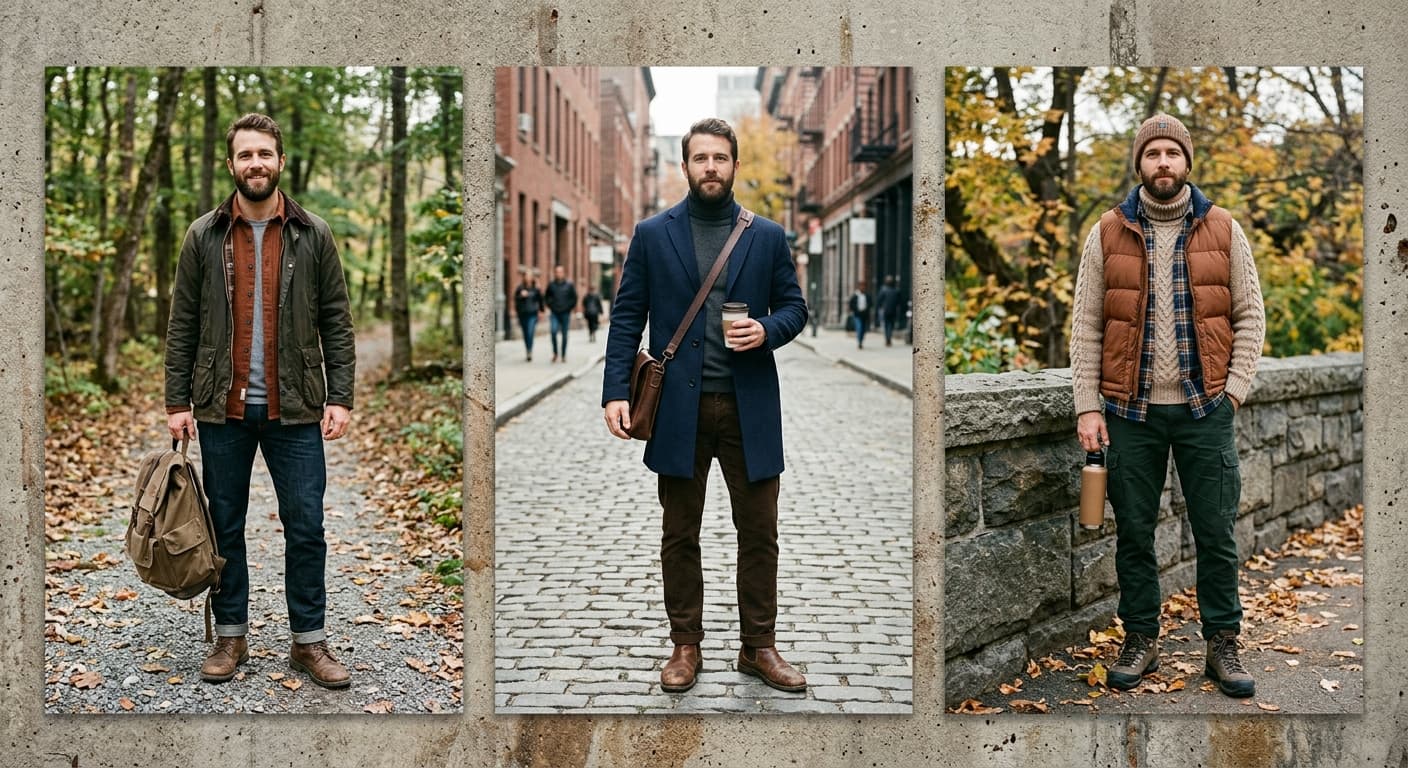
A good fall wardrobe should produce formulas that can repeat with small changes. One might be flannel or rugby shirt, waxed jacket, trouser, and boot. Another might be merino sweater, denim or overshirt, chino, and loafer. Another might be turtleneck, wool trouser, structured outer layer, and Chelsea boot. These formulas feel distinct, but they still share the same wardrobe language.

That repeatability matters because it prevents fall shopping from becoming decorative. Each new piece should make one or two of those formulas easier rather than just looking seasonally correct in isolation.

Three-look collage showing casual, city, and weekend fall outfits

Three-look fall collage showing casual rugged outfit city outfit and weekend layered outfit

Use a small set of uniforms instead of reinventing the wheel

If the outfit formulas are solid, you do not need dozens of pieces to make fall dressing feel good. Swap the shirt, change the trouser, rotate the outer layer, change the shoe. The mood shifts without the wardrobe losing coherence.

That is usually a better answer than constantly adding more statement layers. Strong uniforms make the closet feel richer with less clutter.

Curated Product Recommendations

Elevated

Alex Mill

Chiltern Cropped Jacket In Waxed Canvas

Outerwear

Chiltern Cropped Jacket In Waxed Canvas
Elevated

COS

Seamless Merino Wool Turtleneck Top

Knitwear

Seamless Merino Wool Turtleneck Top
Elevated

Meermin

Dark Brown Calf Chelsea Boot

Footwear

Dark Brown Calf Chelsea Boot

Common Mistakes

Jumping into winter too early

Heavy parkas and thick winter layers can feel wrong through much of fall. Transitional pieces usually do the job better for longer.

Using too much texture at once

Corduroy, suede, flannel, denim, and waxed cotton all together can overwhelm an outfit. Let one or two surfaces lead.

Treating fall color like a costume prompt

Rust, olive, and burgundy work best when they plug into your real neutral base, not when every piece tries to signal autumn at full volume.

Buying outerwear that only works in one exact temperature

Fall layers should bridge the season and work over different underlayers, not lock you into one weather window.

Practical Examples

Rugged casual formula

Textured shirt or rugby, waxed or chore jacket, grounded trouser, and boot create a fall outfit that feels seasonal without trying too hard.

City fall formula

Merino knit, overshirt or denim layer, chino, and loafer give enough polish for work or dinner without drifting into winter stiffness.

Layered weekend formula

Light turtleneck, easy jacket, denim or wool trouser, and Chelsea boot give warmth and structure while staying flexible through the day.

Color through one grounded accent

Use burgundy knitwear, olive trouser, or rust accessory against navy, brown, or charcoal so the outfit feels richer instead of busier.

Product Call-Out Ideas

Fall outer layers worth prioritizing

  • overshirt
  • chore coat
  • waxed jacket
  • light wool layer

Texture builders that keep earning wear

  • corduroy trouser
  • merino sweater
  • rugby or flannel shirt
  • leather boot

Grounding accessories for fall

  • scarf
  • leather belt
  • weather-resistant tote
  • beanie

HiLo Takeaway

Fall dressing works best when texture, layering, and useful outerwear are doing most of the work. The wardrobe feels richer because the surfaces are richer, not because every outfit is more complicated.

Build from grounded neutrals, let a few textures lead, and use a small set of dependable formulas. That is how fall becomes one of the easiest seasons to dress well in.

FAQ

What fabrics work best for fall?

Wool, merino, flannel, corduroy, suede, denim, and waxed cotton are especially useful because they add warmth, texture, and layering range without the heaviness of deep winter cloth.

How do I dress for warm afternoons and cool evenings in fall?

Use removable layers such as tees, light knits, overshirts, and chore coats so the outfit can shift with the temperature instead of locking you into one level of warmth.

Can I mix patterns in a fall wardrobe?

Yes, but it usually works best when one pattern stays quiet and the rest of the outfit is supported by solids or restrained texture.

What boots are most useful for fall?

Chelsea boots and sturdy lace-up boots are usually the most versatile because they work across casual and polished outfits and handle changing weather well.

How many jackets do I need for fall?

Usually two or three versatile outer layers are enough, such as an overshirt, a chore or field jacket, and one slightly warmer structured layer.

Related Guides

Keep reading

View all guides

How to Build a Summer Wardrobe

Build a summer wardrobe with breathable fabrics, relaxed silhouettes, and polished outfit formulas that work in heat and humidity.