Style Guide

How to Use Color Theory for Your Skin Tone

Learn how to use color theory for your skin tone by identifying undertones, testing what works, and building flattering palettes.

Article summary

  • Use undertone as guidance, not as a strict seasonal color rulebook.
  • Test warm, cool, and neutral directions in natural light before making broad assumptions.
  • Build around neutrals that support your complexion, then add color through controlled experiments.
  • Treat confidence, preference, and real wardrobe range as equally important alongside theory.
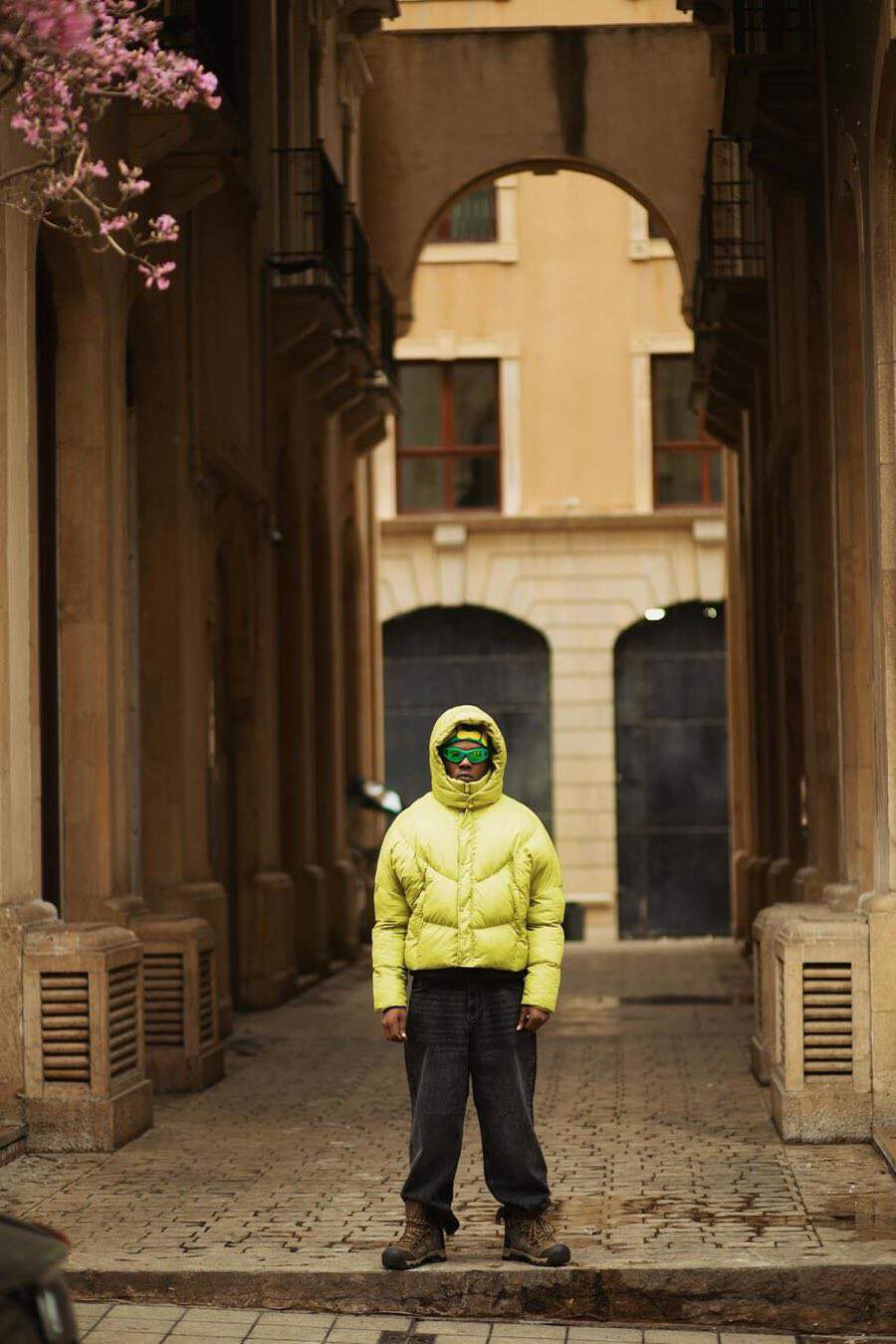
Portrait-led fashion image showing intentional color choices against skin tone

Start by understanding undertone instead of chasing a season

Undertone is the subtle color direction beneath the surface of the skin. It is not the same thing as depth. You can have fair skin with warm undertones, deep skin with cool undertones, or anything in between. This is why broad seasonal labels often feel off. They collapse too much into one system.

The most useful categories are simple: warm, cool, and neutral. Warm usually reads golden, peachy, or olive. Cool often reads pink, red, or blue. Neutral tends to sit between those poles. None of this needs to be mystical. It is just a way of noticing which surrounding colors bring balance to your face and which ones interrupt it.

That balance matters because color sits close to the face differently than it sits on a shoe or bag. The wrong top can make skin look flat, shadows look harsher, or redness look stronger. The right one often makes the face look clearer before you can even explain why.

Comparison of warmer vs. cooler undertones

Comparison of warmer vs. cooler undertones

Photo by ROCKETMANN TEAM on Pexels

Look for the colors that make your face look clearer, not louder

The most practical test is comparison, not theory. Hold a true white shirt or sheet of paper near the face in daylight. Try both gold and silver jewelry. Compare a warm shade like rust or olive against a cool shade like cobalt or berry. The goal is not to diagnose yourself in one minute. It is to notice which colors make the skin look even and the eyes more awake.

This is also why taking photos can help. In the mirror, you can get distracted by styling, hair, or mood. A photo in natural light often makes the contrast easier to see. One color may brighten the skin while another emphasizes under-eye shadows or redness. Once you notice the pattern a few times, the undertone usually becomes easier to trust.

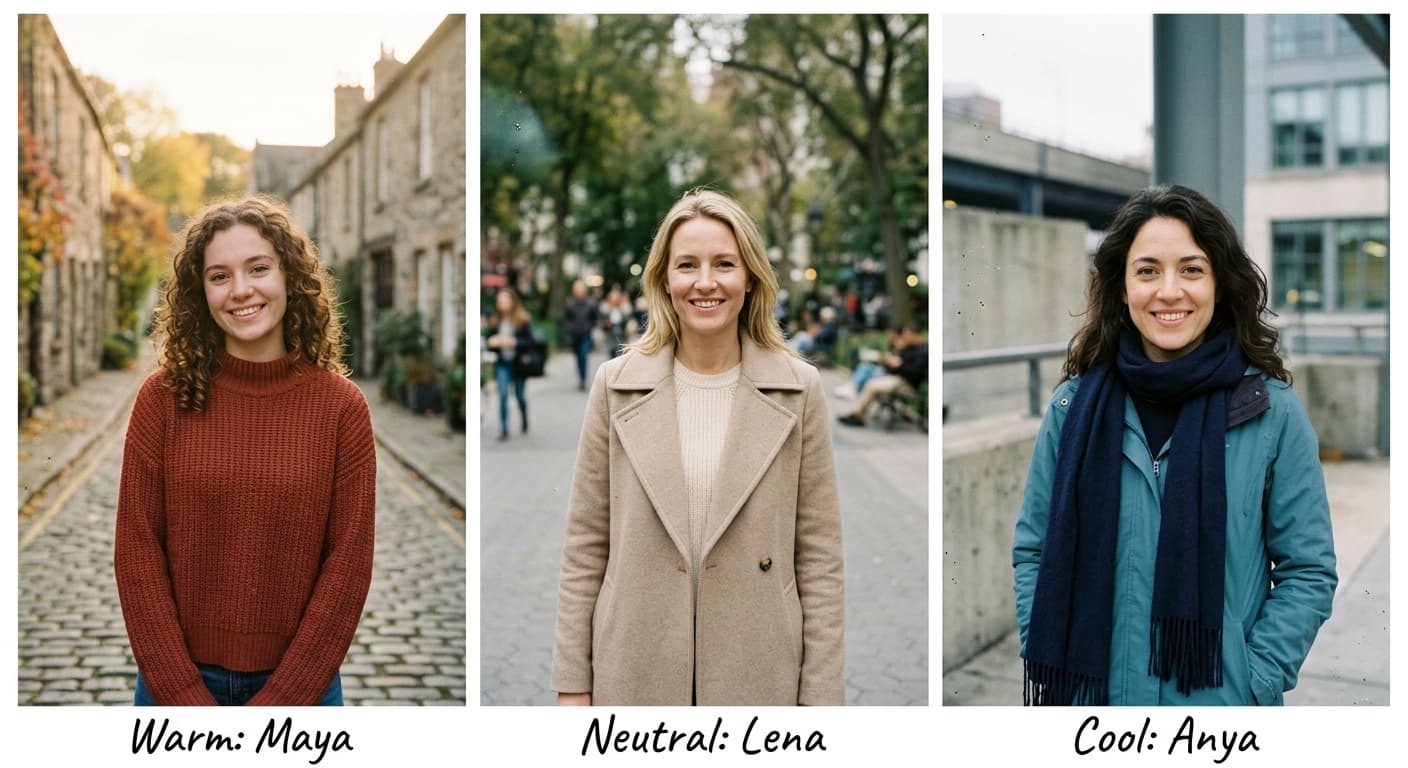
Portrait comparison showing warm, cool, and neutral clothing colors

Portrait comparison showing warm, cool, and neutral clothing colors

Warm, cool, and neutral each have different strengths

Warm undertones often come alive with camel, cream, olive, terracotta, mustard, and softened warm reds. Cool undertones often look strongest in true white, navy, charcoal, cobalt, berry, and jewel tones. Neutral undertones usually have more range, but that range still benefits from control. Mid-tones and softened versions of strong colors often work especially well.

The point is not to reduce the wardrobe to one small palette. It is to find your strongest lane first, then branch out. Most people do better when they know their reliable colors before they start experimenting at the edges.

Better neutrals usually matter more than more colors

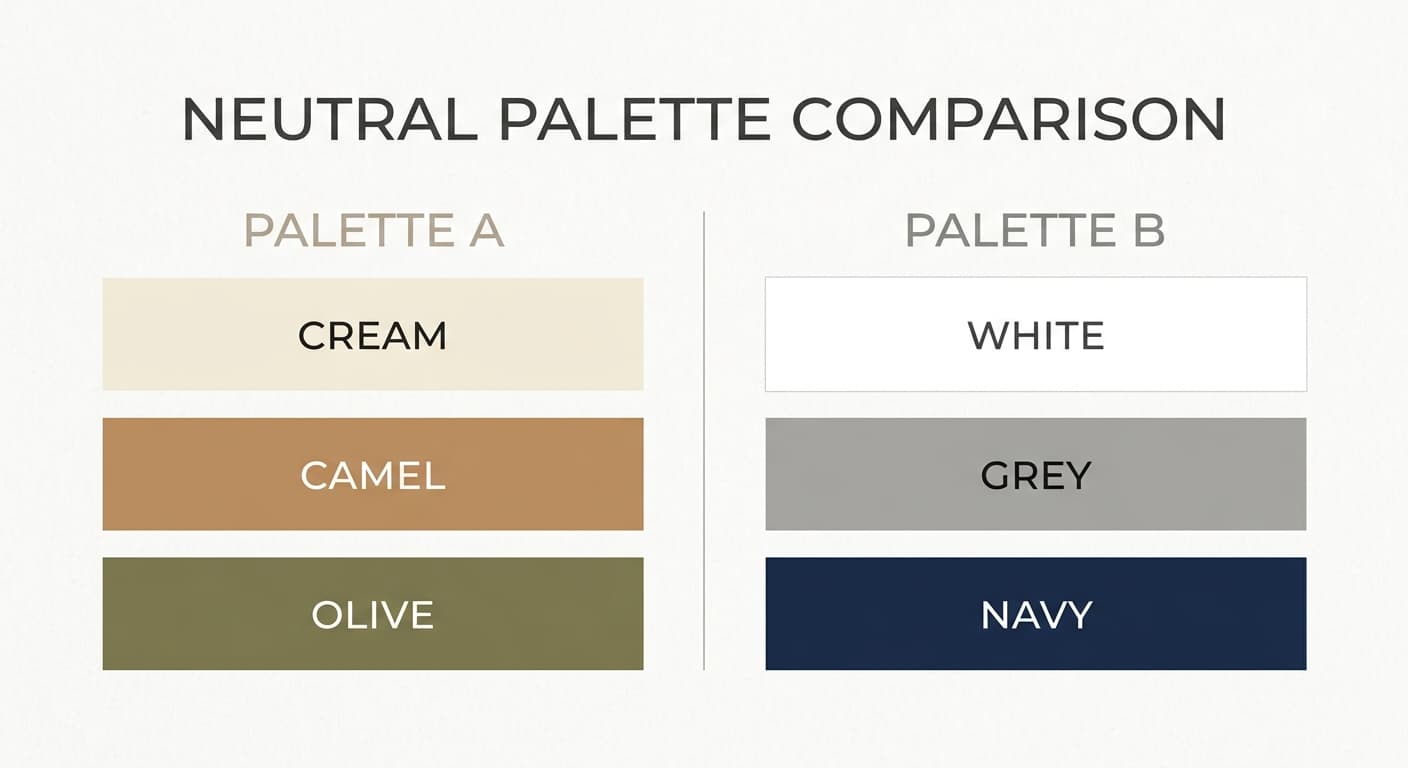
People often think the answer lies in finding the perfect bright color, but neutrals usually do more work. If your wardrobe is built around tops, jackets, and scarves in neutrals that flatter your undertone, everything else becomes easier. Warm undertones often look stronger in cream, ivory, camel, and warm khaki. Cool undertones often thrive in true white, grey, navy, and blue-black.

This is where many wardrobes quietly lose coherence. A person may own lots of neutral basics, but the undertones inside those basics fight each other. A cool white tee with a warm camel blazer and a yellow-beige trouser can feel off even before color enters the conversation. Good neutrals reduce that friction fast.

Neutral palette graphic comparing warm and cool neutral families

Neutral palette graphic comparing cream camel olive with white grey navy

Use pops of color after the neutral base makes sense

Once the base is working, color becomes much easier to test. If warm neutrals suit you, try earthy accents such as rust, olive, tomato, or softened coral. If cool neutrals suit you, try cobalt, emerald, berry, or icy pastel versions. If you are neutral, you may be able to move between both families, especially when the intensity stays controlled.

This order matters. People often buy strong colors first and try to solve the neutral base later. That usually makes the wardrobe feel fragmented. A better method is to build from the colors you can wear three times a week, then add accents that wake them up.

Curated Product Recommendations

Staples

Province of Canada

Washed Poplin Shirt Navy - Unisex

Shirts

Washed Poplin Shirt Navy - Unisex
Elevated

COS

Men’s Cotton Straight-Leg Chinos

Trousers

Men’s Cotton Straight-Leg Chinos
Elevated

KOTN

Women's Acacia Tie Boatneck Tee

Shirts

Women's Acacia Tie Boatneck Tee

Experiment before you commit to a whole palette

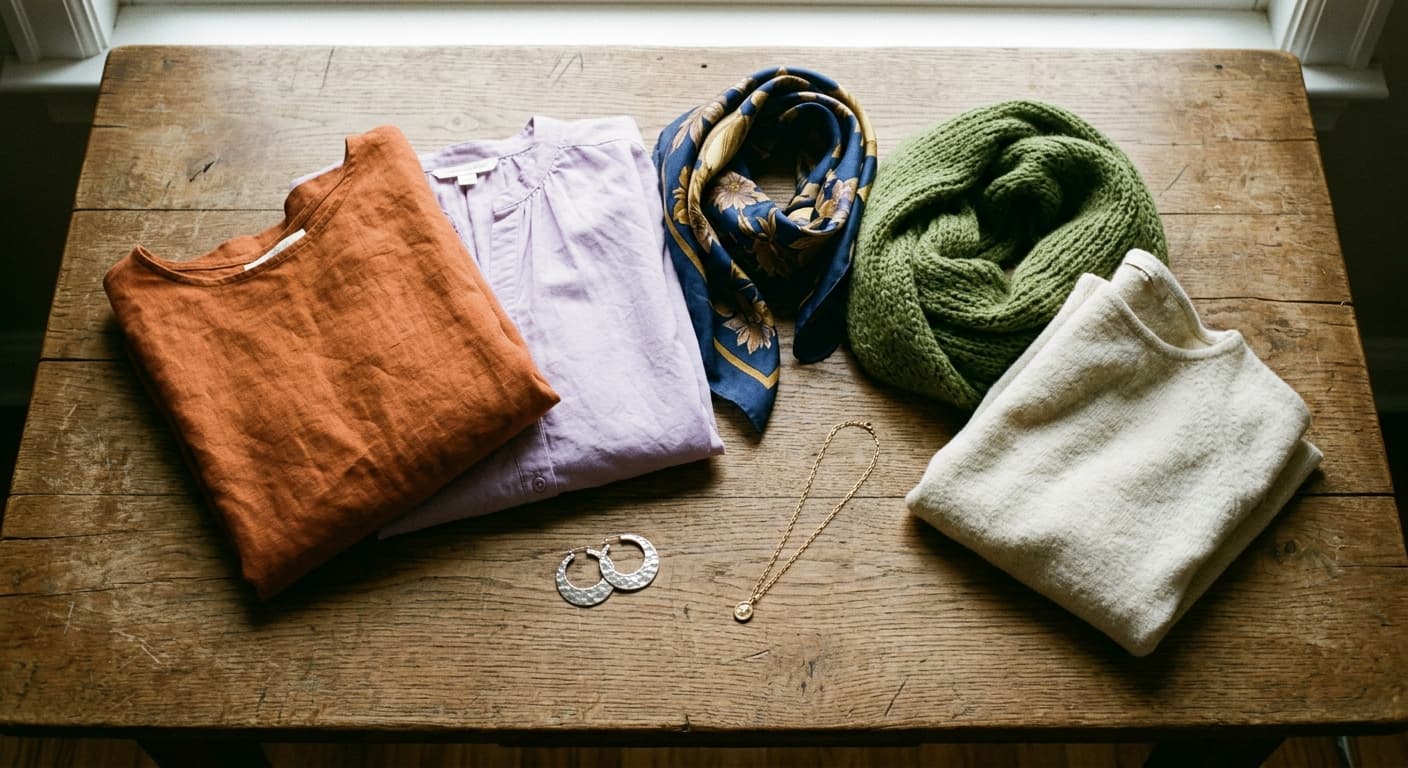
A practical way to test new colors is to start with smaller or less expensive pieces. Scarves, tops, knitwear, jewelry, and bags let you observe how a color behaves near the face without rebuilding the whole wardrobe around it. This is especially useful if you are curious about shades that fall outside your strongest lane.

It also keeps color theory from becoming restrictive. Maybe cobalt technically suits your undertone best, but you love olive. Fine. The better question is how to wear olive in a way that still supports you. That might mean pairing it with a more flattering neutral, wearing it farther from the face, or choosing a softened version instead of the harshest one.

Flat lay of scarves, jewelry, and tops used to test undertone-friendly colors

Flat lay of scarves, jewelry, and tops used to test undertone-friendly colors

Build outfit examples around undertone, not around rules

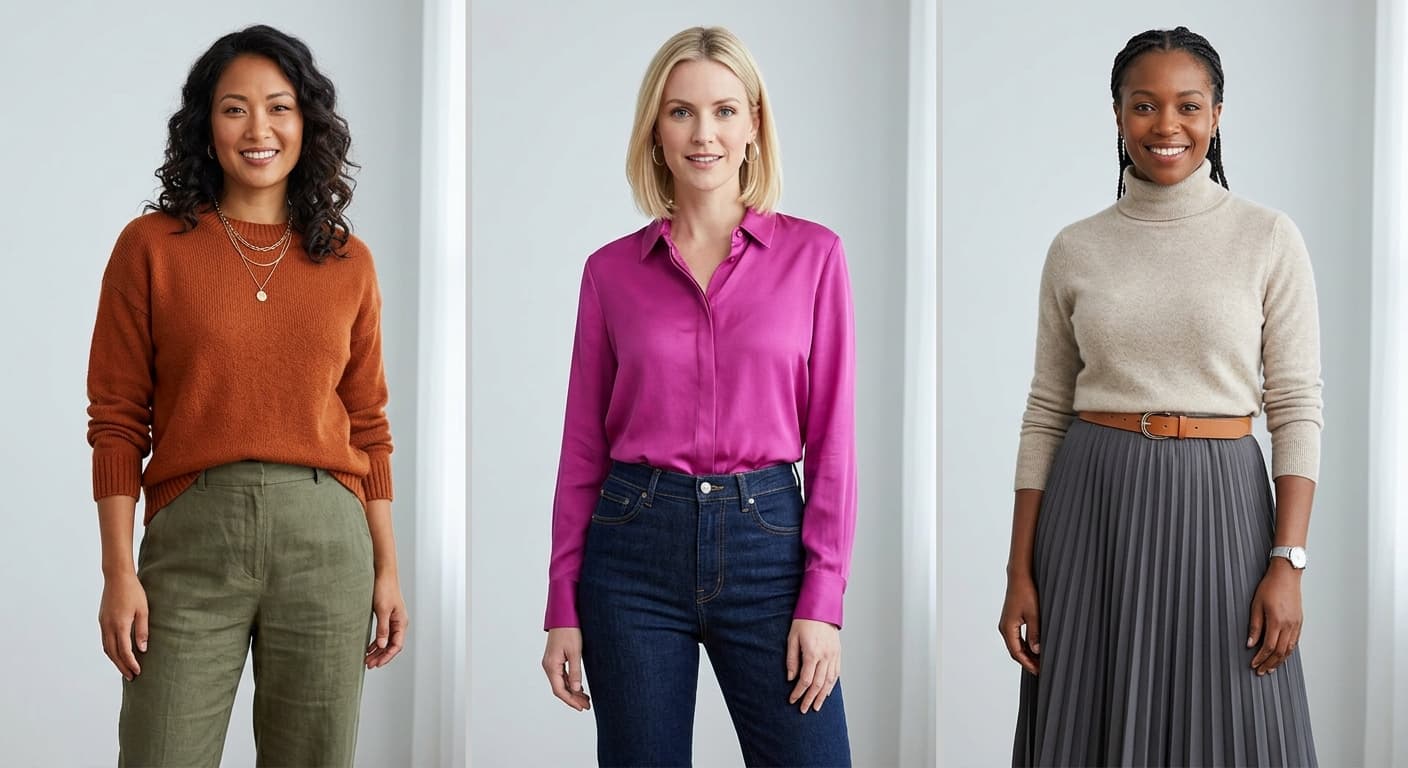
For warm undertones, a useful formula might be cream shirt, olive trouser, brown sandal, and gold jewelry. For cool undertones, navy trouser, white shirt, silver earrings, and cobalt knitwear often feels sharper. For neutral undertones, cream, navy, and one red or forest accent can work well because the base stays balanced while the accent adds life.

These examples matter because color theory should end in outfits, not swatches. If the colors do not help you get dressed more easily, they are not doing their job. That is why HiLo treats undertone as one tool among many. Fit, texture, silhouette, and lifestyle still matter. Color just becomes clearer once you know where your foundation starts.

Three outfit examples for warm, cool, and neutral undertones

Models showcasing warm, cool, and neutral undertones and outfits that complement them

Common Mistakes

Treating seasonal analysis like law

Undertone is useful, but rigid seasonal systems often flatten individuality and lead people to ignore what actually looks good on them in real life.

Confusing skin depth with undertone

Fair, medium, and deep skin can each be warm, cool, or neutral. Undertone is about color direction, not about how light or dark the skin is.

Buying strong colors before fixing your neutrals

If the basic shirts, jackets, and scarves already fight your complexion, adding more color usually creates more noise instead of clarity.

Assuming a tan changes your undertone

Skin depth can shift with sun exposure, but the undertone underneath usually stays the same. What changes is often the amount of contrast you want.

Practical Examples

Warm undertone starting formula

Cream, olive, camel, and softened tomato often create a flattering base because the warmth stays coherent without becoming overpowering.

Cool undertone starting formula

White, navy, charcoal, cobalt, and silver usually look crisp together because the cool direction stays clean and balanced.

Neutral undertone starting formula

Cream, navy, soft brown, and one clearer accent often work well because the outfit has flexibility without losing structure.

Testing a risky color safely

Try the shade in a scarf, knit, or accessory near the face first, then photograph it in daylight before deciding whether it deserves a bigger wardrobe role.

Product Call-Out Ideas

Warm-leaning wardrobe colors

  • cream tee
  • camel trouser
  • olive shirt
  • soft rust knit

Cool-leaning wardrobe colors

  • true white shirt
  • navy trouser
  • charcoal knit
  • cobalt accent top

Easy ways to test color first

  • scarf
  • earrings or jewelry
  • light knit
  • bag or shoe accent

HiLo Takeaway

Color theory for skin tone works best when it gives you a useful starting point, not a new set of limits.

Find the neutrals and accents that make your face look clearer, then build outward with curiosity. That is how color becomes more flattering and the wardrobe becomes easier to navigate.

FAQ

How do I figure out my skin undertone?

Use comparison tests in natural light: warm versus cool tops, gold versus silver jewelry, and true white near the face. The pattern across a few tests is usually more reliable than any one trick.

Can my undertone change over time?

Usually no. Your skin depth can change with sun exposure or season, but the underlying warm, cool, or neutral direction tends to stay the same.

Should my neutrals match my undertone?

Usually yes. Warm undertones often look better in cream, camel, and olive-based neutrals, while cool undertones often look better in white, grey, and navy-based neutrals.

What if I like a color that is not supposed to suit me?

Wear it more strategically. Try a different shade, move it away from the face, or pair it with more flattering neutrals. Preference still matters.

Do neutral undertones get to wear anything?

Neutral undertones often have more flexibility, but they still tend to look best when color intensity and neutral direction are chosen with some care.

Related Guides

Keep reading

View all guides

How to Build a Spring Wardrobe

Build a spring wardrobe with lighter layers, smart fabrics, and repeatable outfit formulas that handle weather swings without making your closet feel random.

How to Build a Summer Wardrobe

Build a summer wardrobe with breathable fabrics, relaxed silhouettes, and polished outfit formulas that work in heat and humidity.